
Manual Therapy
Manual therapy in Budapest that really eliminates the source of the complaint.
At Physiokert, we work with the medically based Barvichenko method, which is unique in Hungary. We don’t “crack” — we examine exactly where and why the problem is, and treat it specifically.
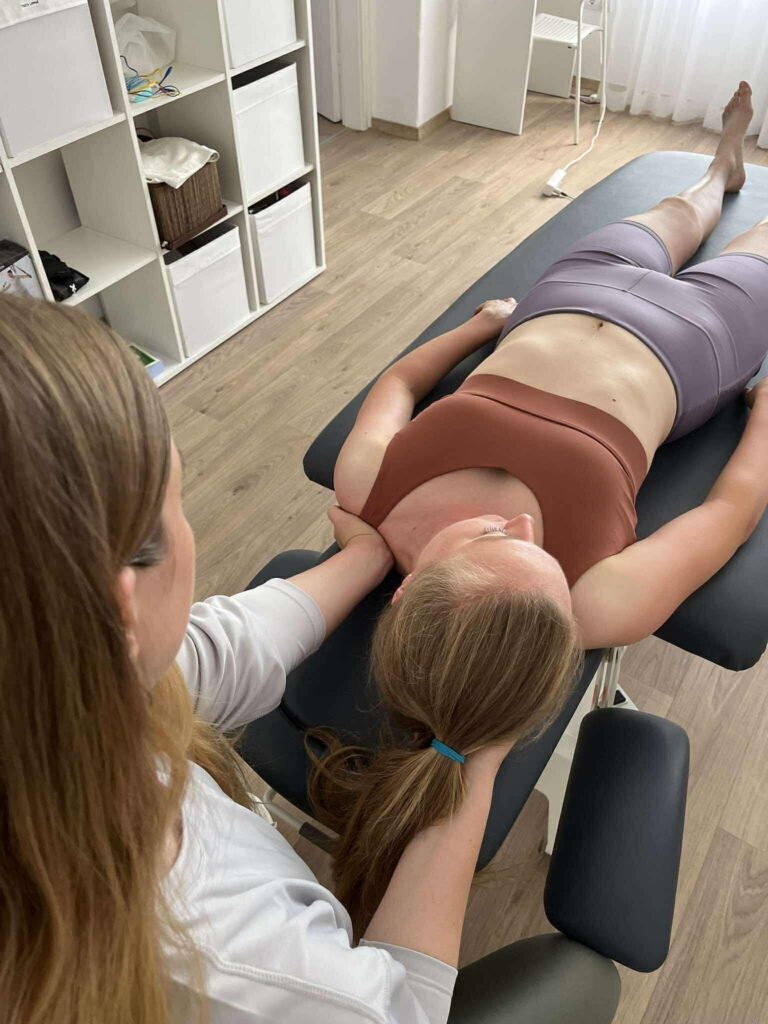
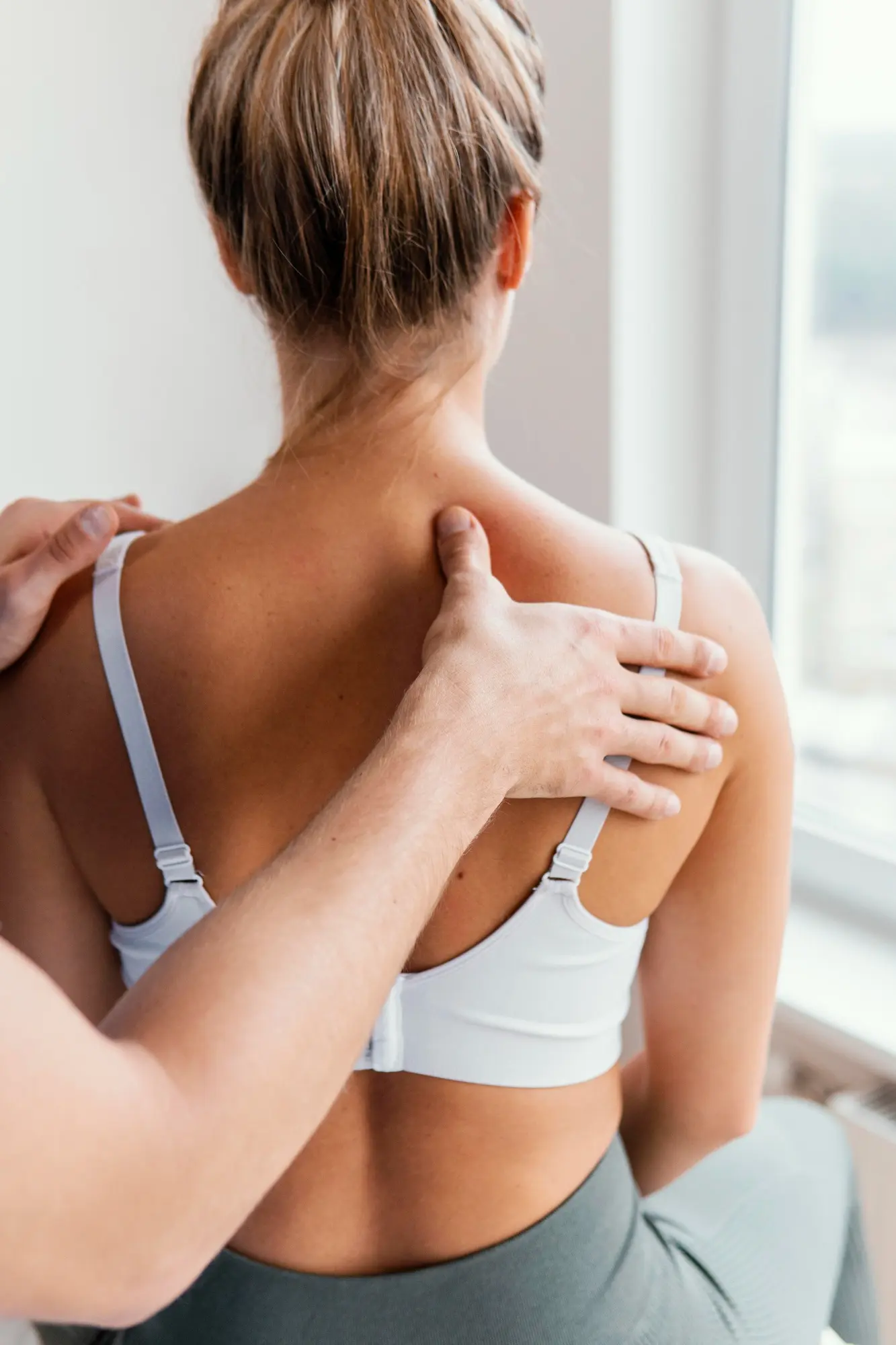
What is manual therapy – and how is it different from chiropractic?
Manual therapy is a specialized, hands-on diagnostic and therapeutic procedure that targets the causes of musculoskeletal complaints, not just the symptoms. The goal of manual therapy is to restore function.
Many people compare it to chiropractic, but it is important to make a distinction:
manual therapy is not “crunching”, but a medically based, professionally established treatment that can only be performed by a qualified physiotherapist or doctor.
Barvichenko's manual therapy
Barvicenko’s procedure is a state-recognized, accredited manual therapy, which has been the cornerstone of professional training in Hungary for decades.
- This method can only be performed by a professional with a health degree.
- It is based on medical principles, not guesswork. All treatments are preceded by thorough diagnostics: posture, joint movements, muscle tests.
- Completely personalized treatment. No standard protocol — a plan tailored to your complaints from the very first minute.
- Long-lasting results, not temporary relief. They are also given home exercises to ensure that the improvement achieved remains stable.
Why is it good?
Real reason, real solution
We find the real cause of the pain. Non-symptomatic treatment — with thorough diagnostics, we reveal where and why the problem arose.
Medical-grade safety
Without lay risk. You will be treated exclusively by an accredited, medically qualified professional. The only official training of this kind in Hungary.
Personalized treatment plan
No standard protocol. Therapy tailored to your body, your complaints and your lifestyle, from the first minute to the last.
Long-term, guaranteed improvement
It is not a temporary relief. You will also receive home exercises so that the improvement achieved in the treatment table is maintained for weeks and months.
Full range of motion, lasting results
It is most effective when combined with physiotherapy. Manual therapy restores joint mobility, and physiotherapy teaches you how to use your body well.
How often should you come?
- Initially: 1–2 times weekly
- Later: every 3–4 weeks
- As a maintenance: It is worth returning every 6 weeks for a check-up or maintenance.
This helps to prevent the treated area from regressing and to help the body maintain new, healthy movement patterns.

How does a treatment work?
Manual therapy is not based on guesswork, but on thorough questioning, observation, and tactile examination.
1. We start with a condition assessment
After discussing the nature of the complaints in detail, we examine the posture. We assess the movements of the trunk and look for asymmetries or load differences.
2. Examination of the pelvis
Patching the key points of the pelvis is particularly important, as this is the base of the spine. If there is a displacement here, it can affect the entire spine.
3. Segmental spine examination
This means that we move from vertebra to vertebra, while palpating the entire spine. We sense whether the given joint is moving properly, or whether there is a blockage (block) or excessive movement (hypermobility).
4. Muscle tests, soft tissue examination
How active are individual muscles or muscle groups, how do they function, and whether there is an imbalance or weakness between them. The tests help to reveal whether a given complaint is due to a decrease in muscle strength, shortening, compensation, or a disorder of nerve regulation.
5. The treatment
During the treatment, the manual therapist relies on both the signs felt by touch and those seen during movement. The therapist sets up the treatment plan not according to a template, but completely individually, using gentle, manual mobilization techniques to resolve dysfunctions and help restore natural movements.
6. Personalized exercises
Manual therapy does not end on the treatment table: we teach you the most important exercises that you can do at home. These help you maintain the results you have achieved and support long-term improvement.
Why is it the perfect complement to physiotherapy?
Manual therapy restores freedom of movement within the joints, specifically loosens tight soft tissues, but it is not enough on its own. Then, in physiotherapy, we teach the body to use itself well:
- We strengthen or stretch the muscles
- We stabilize or free the joints depending on their function.
- We make you feel the separate functioning of the muscles
- We help activate the nervous system and build the nerve-muscle connection.
- We teach you how to develop the correct movement pattern.
The two therapies work together to achieve the most effective, safest, and most lasting results.

What they said about us
Frequently asked questions
Fájdalmas a manuálterápia?
Általában nem. A mobilizációs technikák finomak és kontrolláltak. Esetleg átmeneti érzékenység előfordulhat kezelés után, de ez elmúlik.
Mennyibe kerül egy kezelés?
Árlistánkat itt találja: https://physiokert.hu/arlista/ . Az első alkalom mindenképpen egy állapotfelmérés, ahol pontosan megbeszéljük a várható kezelési tervet és annak költségét.
Hány kezelés szükséges?
Ez erősen egyéni és a panasz jellegétől függ. Sokak esetén már 2-3 kezelés után érzékelhető javulás tapasztalható. Az első kezelésen reális képet adunk a várható folyamatról.
Biztonságos? Kinek nem ajánlott?
A Barvicsenko-féle manuálterápia biztonságos, orvosi alapokon nyugvó módszer. Bizonyos állapotokban (pl. osteoporosis, gyulladásos ízületi betegség) ellenjavallt — erről az első vizsgálaton tájékoztatjuk.
Miben különbözik a csontkovácsolástól?
A csontkovácolást laikusok is végezhetik. A manuálterápiát kizárólag egészségügyi diplomával rendelkező, akkreditált képzésen átesett szakember végezheti. Az alapos diagnosztika és az egyénre szabott terv teszi tartóssá az eredményt.
Not sure yet? Write to us!
Briefly describe your complaints and we will contact you – completely without obligation.
- Gyógytorna, manuálterápia, masszázs
- 1118 Budapest, Budaörsi út 5.
- +36 30 195 0010
- info@physiokert.hu